
How to Keep Betta Hendra Fish in the Water Tank

How to take care of Betta Hendra fish in the water tank? Find out about their diet, tank size, temperature, maximum standard lengths, and reproduction here.

Even with their wild origin, Betta Hendra is a fascinating option to be kept in captivity, such as in tanks or glass bowls.  Compared to other Betta types, Betta Hendra is more aggressive, competitive, and active. You can also keep your Betta Hendra in the same tanks with the same species. Here are some tips about how to take care of Betta Hendra fish in the water tank.
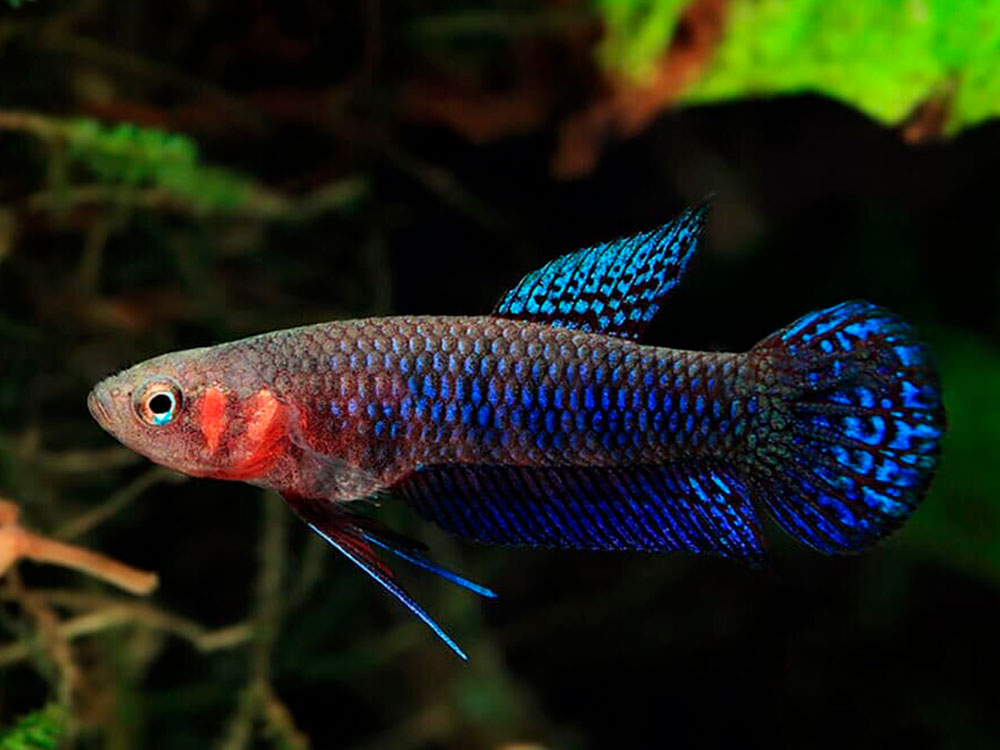

About Betta Hendra Fish

Betta Hendra comes from the Sabangau, the black water peat swamp forest in Palangkaraya—the capital city of Central Kalimantan, Indonesia. They have stunning bright greenish iridescent color on the flanks and fins. Betta Hendra is skittish with a common length of 3 until 4.5 cm or 1.2 until 1.8 inches. 

Keeping Betta Hendra in the Water Tank

Betta Hendra does well even in small tanks. Keeping them in 2.5 to 3-gallon tanks is the best way on how to take care of Betta Hendra fish. Or, 45x30 centimeters or equivalent tanks are spacious enough for a pair of Betta Hendra or a small group of them. The maximum standard lengths are 30-45 millimeters. 

Supply gentle filtration and a tight-fitting lid to avoid them from jumping out. Besides that, keep your layer of air warm. A warm layer of air also works as an insulating buffer. Keep the temperature around 74-78 Fahrenheit or 22-27 Celsius. A temperature higher than 78 Fahrenheit might shorten your Betta Hendra’s lifespan. 

Because they are coming from the wild, putting dead leaves or plants, branches, and driftwoods will favor them. They enjoy hiding in and around. It is better to keep them alone or with those of their species.

If you wish to group them with other species, choose peaceful types. Do not place Betta Hendra with other fish that are bigger, brighter, or faster. Those kinds of types may intimidate or stress out your Betta Hendra. 

Reproduction

Betta Hendra are bubblenesters. When breeding, the male will create a bubble nest under dead leaves or plants. Later on, the male will attract the female by showing his stunning fins as he wraps himself around the female. 

The male will release milt while the female releases eggs. Then, both the male and female will recoup the eggs and take them under the bubble nest. Once the spawning is complete, you need to take care of the eggs; the eggs will hatch in 24 to 72 hours. You can introduce food to the offspring after the fry is free-swimming.       

We hope you find this article on how to take care of Betta Hendra fish in the water tank useful. Remember to put them in the perfect size aquarium. Because Betta Hendra is an excellent jumper, keep the tank well-covered.


Popular posts from this blog

How to Choose a Good Quality of Koi Fish

Sometimes, purchasing koi fish to place in your pond can be difficult, especially when you haven’t decided which best type to take home. Well, if you ask, there are two aspects to be considered for choosing the best quality of koi fish. First, the price is the factor you need to think before making a decision. If you are a beginner, it is possible for you to make mistakes. So, it is better to choose the low-priced koi so you won't waste anything in a great deal. Second, the resilience of the koi is another thing you need to consider. As a beginner, you should anticipate the possible mistakes you will do in the future. Let's say that you may forget to feed them or clean their pond. That is why taking home koi with good resilience is a good idea. Then, after you understand those two aspects, you can read and think over the types of koi fish of good quality below. 1. Kohaku Koi Fish The impression of Kohaku Koi fish is simply iconic. Also, because of their resilience and their f...

Types of Cory Catfish and Fish Feed

(Meta description:  Cory catfish are loved for their friendly, sociable manners. They are also easily maintained. Get to know the type and how to  feed cory catfish.) Cory catfish is a favourite to those who love pet fish. They are friendly and easily maintained. Get to know the type of and how to feed cory catfish. 5 Types of Cory Catsifh                1.      Bronze cory catfish (Corydoras aeneus). This type of cory catfish can be either bronze (obviously) or green. They can grow as long as two and a half to three inches (7.5 centimetres). Another thing that affects their growth is the size of the aquarium. The bigger it is, the longer their bodies can grow.        2.      Panda cory catfish (Corydoras panda). With pale bodies, panda cory catfish have black patches on, especially around their eyes. Panda cory catfish is also often mistaken for Corydoras m...

Benefits of Maintaining Bala Sharks Fish at Home

Meta-Description: Here are some benefits of maintaining Bala Sharks fish at home. Know more to reveal what you can get from these stunning creatures. One of the exotic freshwater aquarium choices for the fish hobbyist is Bala Shark. The fish, also known as Tricolor Minow, are schooling fish that will give a magnificent addition to the tanks. And don't feel intimidated with the name, because, the only one that can relate this fish to that giant sea creature is the fin. Far from being dangerous and terrible, Bala Shark is an exotic fish with tolerant behavior and easy temperament. And there are still many benefits you can get from maintaining the fish in the tanks. Read more to know the benefits of maintaining Bala Sharks fish at home: Easy Feeding Habits Bala Shark is omnivores that naturally eat insects their own larvae and eggs, and phytoplankton. In the tanks, you can give them frozen food or dry ones. Their feeding habits are easy and won't burden you. Ho...