
How to Keep Cherry Barb Fish in Aquarium

Meta: Keeping Cherry Barb fish in the aquarium needs a few things to note, starting from fish tanks to their ideal tank mates. Read this article to learn more!

Cherry Barb fish is famous among aquarists because of its bright red-colored body. Having the idea of keeping the Cherry Barb fish in the aquarium is quite common. Here is a guideline on what you need to know about it.

Natural Habitat

Getting to know the natural habitat of Cherry Barb fish is a good place to start before diving into tank setups. Why? By knowing their habitat, we can easily recreate it and make them feel like they’re home.
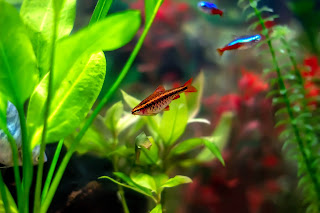

 Their natural habitat is the wet areas of Sri Lanka forests that provide many places to hide. The rainy season forms ponds and calm streams that are suitable for them. Aside from that, they usually inhabit an area in schools and not individually.

Tank Size

As mentioned before, this species of fish swims in schools. It is recommended to get a 25 – 30-gallon aquarium tank. The extra room allows them to swim around more freely, even with decorations.

The recommended amount of Cherry Barbs is 1 per 5 gallons. It means that for a 30-gallon tank for keeping a maximum of 5 to 6. Do not overcrowd your tank with too many fishes because overcrowding can cause stress and illness.

Decorations

Once you get the correct tank size, it’s time for decor. As mentioned before, their natural habitat is inside a forest. Can you imagine the natural debris and plants? Having many plants in your tank that mimic their natural habitat can make them happy. Other than that, it will also make the fishes look even brighter due to the background.

The recommended plants are Anacharis, Java Fern, and Hornwort. Aside from the greenish background, keeping the Cherry Barb fish in the aquarium with a dark substrate like coarse gravel can elevate the beauty of the Cherry Barb’s red cherry color. Another tip is to keep low lighting if you don’t plan on providing shades or places for them to hide except the plants.

Water Condition

Sri Lanka is a tropical country; therefore, the water condition of a Cherry Barb fish should be as follows:
1. The temperature of 22 – 27.5 degrees Celsius
2. Hardness between 4 to 15
3. The pH of 6 to 7.5
4. Moderate water flow

Make sure to keep the water condition of the water tank as stable and close as possible to the parameters given.

Tank Mates

Cherry Barbs are shy when alone but confident in schools. This makes them fairly active and peaceful. Their aggressive nature only shows when they are attempting to mate (or to assert dominance.) A good ratio is one male per two females in a school.

The described behavior makes them compatible with fishes like tetras, Glass Catfish, and other barb species. There are plenty more peaceful community fishes that you can join them with. Keep in mind to not overcrowd your tank.

Those are the basic guidelines on keeping the cherry barb fish in the aquarium. Some say that they are easy to take care of, making them suitable for both new and experienced hobbyists. With the right setup, the fishes can have a long and happy life. Let’s be a responsible pet owner.

Popular posts from this blog

Factors that affect the health of Koi fish

The health of koi fish is influenced by several critical factors which must be managed effectively to ensure their well-being and longevity. Water Quality Ammonia Levels: High ammonia levels can lead to toxic conditions that compromise fish health. Regular testing and filtration systems are vital. pH Levels: The ideal pH range for koi is between 7.0 and 8.5. Extremes in pH can cause stress and illness. Oxygen Levels: Adequate dissolved oxygen levels are essential. Aeration can help maintain optimal conditions, especially in warmer months. Temperature: Koi thrive in temperatures between 65°F and 75°F. Sudden temperature changes can create stress. Koi Fish (shutterstock.com) Diet and Nutrition Quality of Feed: A balanced diet rich in essential nutrients affects koi health, growth, and coloration. Consider high-quality pellets and supplements. Feeding Practices: Overfeeding can lead to water quality issues while underfeeding may cause malnutrition. Careful monitoring is necessary. Environ...

Platypus habitat

The platypus is a unique and fascinating monotreme native to Australia. It is one of the few egg-laying mammals and is known for its distinctive features, including a duck-like bill, webbed feet, and a flat tail. The platypus has a streamlined body adapted for aquatic life, and it primarily inhabits freshwater streams and rivers. platypus ( shutterstock.com) One of the most notable characteristics of the platypus is its bill, which is sensitive to electrical fields generated by the movements of prey underwater. This adaptation allows the platypus to hunt efficiently for invertebrates and small fish while swimming with its eyes and ears closed. In addition to its bill, the platypus has webbed feet that assist in swimming but have retractable claws for digging burrows. The platypus is also remarkable for its unique reproductive method. Female platypuses lay one to three eggs, which they incubate in a burrow. After hatching, the young feed on the mother’s milk, which is secreted through o...

Environmentally Friendly Catfish Farming

Catfish farming is a significant aquaculture activity with high market demand. Implementing environmentally friendly practices ensures sustainable production while minimizing adverse ecological impacts. Key strategies for eco-friendly catfish farming include: catfish farming depositphotos.com 1. Sustainable Water Management Recirculating Aquaculture Systems (RAS): These systems reuse water through filtration and treatment, greatly reducing water consumption and waste discharge. Water Quality Monitoring: Regular checks of pH, dissolved oxygen, nitrogen compounds, and temperature help maintain optimal and stable conditions, preventing pollution. 2. Eco-Friendly Feed Practices Use of Natural or Locally Sourced Feed: Reducing reliance on commercial pellets that may contain unsustainable fishmeal or soy. Feed Optimization: Feeding the right amount reduces waste and feed residues that pollute water bodies. 3. Integrated Farming Systems Aquaponics: Combining catfish farming with vegetable cul...