Meta: Cherry Barb fish breeding requires many things to prepare. This article will guide you through it, from identifying their genders to feeding baby Cherry Barbs!
Cherry Barb fish breeding can be quite a process. Whether you are a veteran or a new aquarist, trial and error is a common thing that everyone experienced. Learn from your mistakes, and someday you will succeed. Have you got your confidence? Now let's start breeding fishes!
Identifying Male and Females
The first step is to identify and choose the parent. Male Cherry Barb tends to be red when they are ready to do some spawning. Their body will remain slender, the same as before and after breeding.
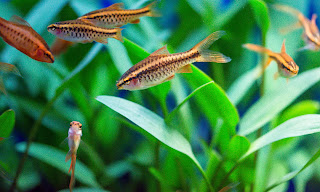
Meanwhile, the female tends to have a lighter color with pale coloration. They have a darker lateral line than the males. When spawning, their body will get very round as the eggs are ready. By knowing the differences, it should not be that hard to differentiate them.
Behavior During Breeding
When the breeding time comes, the male usually becomes aggressive. They will chase the females everywhere. As for the male-to-male interaction, they will try to assert dominance over another. Although it rarely happens, you should be on the lookout.
Prepare a Breeding Tank
Well then, now that you have learned how to differentiate between male and female Cherry Barbs, it's time to set up a breeding tank. If you are a beginner, you can try this too! On one tank, you need one male and two females. Why? Firstly, to avoid any competition between the males. Secondly, the male's sudden hyperactive behavior can get a female 'overworked.'
Now, to make Cherry Barb fish breeding, you need to set well-equipped tanks with water temperatures ranging between 26 – 28 degrees Celsius. This will trigger the male to become even redder than before. The brighter the color means that the male is even readier.
Time to Breed
Understandably, you may want to see the miracle of nature (seeing the Cherry Barbs doing it). However, they like to do it in private with lights out. To help them get into the mood, it is also good to place plants (like Java Fern and Hornwort) on the breeding tank because it provides more privacy! Keep an eye on them for a few days, and soon you will start to see some egg scattering.
Aftermath
After seeing some eggs, it is time for you to step up and do the parenting. Upon breeding completion, you need to separate the adults from the eggs. This is done to prevent them from eating it. Another crucial thing to keep in mind is not to expose the eggs to bright lights.
During one breeding session, the female can lay up to 300 eggs. The eggs will begin to hatch after 1 – 2 days. Once they hatched, you will see small juveniles swimming around. Feed them with infusoria until the age that they can eat brine shrimp and small flakes. Don't forget to do water maintenance!
That is a brief guide on Cherry Barb fish breeding. Take your time to prepare everything, from breeding tanks to infusoria. Having everything that you need readily available will save you time and effort. Hopefully, this article helped you, and good luck!
https://kidadl.com/animal-facts/cherry-barb-facts
https://www.seriouslyfish.com/species/puntius-titteya/
https://www.aquariumsource.com/cherry-barb/
https://www.fishkeepingworld.com/cherry-barb/
https://www.thesprucepets.com/cherry-barb-fish-species-profile-5187999