On a Sunny Day, You Crave Silver Barb Fish, but Randomly You Want to Learn Where to Find Them. Get On; We are Going to Cater to the Habitat of Java Barb Fish.
If we travel to communities in Indonesia, we will notice that Java Barb fish is very easy to find in rivers, making it a popular dinner. It is a great dish that will take your enjoyment to the next level when complemented by chili sauce.
Before anything else, we should know that Java Barb fish is famous with several names, including Badar, Java Barb, Tawes, Lawak, and others. Here's a sneak peek for people who want to learn more about the habitat of Java Barb fish.
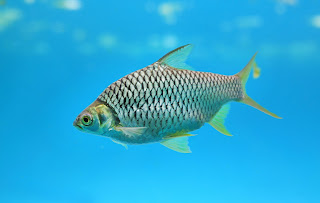
The Java Barb, also known as Barbonymus gonionotus, is a kind of fish native to Indonesia, namely the waterways of Sumatra and Java. Because of its silver scales and orange and red-tipped dorsal and caudal fins, this Java barb is also known as the Silver Barb.
This fish has a small head on top of a muscular, densely packed body with a tapering mouth. The size is not as large as fish found in large seas. Most of these freshwater fish species can only reach a height of 40 inches. However, in other situations, we can find the enormous size, which has been found in Malaysia with lengths of up to 90 cm and weights of up to 13 kg.
The Habitat of Java Barb
Tawes or Java Barb can be found in natural settings, such as river systems and tributaries, flood plains, and reservoirs. This fish appears to prefer stagnant water. It usually moves from main rivers to tributaries, channels, and floodplains, but rarely across long distances, especially at the start of the rainy season. The Mekong River, the Chao Phraya, the Malay Peninsula, Sumatra, and Java are all places where they can be found in their natural habitat.
As can be observed, the habitat of the Java Barb fish is in a water area without a chaotic stream. It explains why this fish is easily found in fresh water in tropical and subtropical regions, specifically from waters in Indonesia to China.
Another intriguing aspect of this fish is that it is very easy to reproduce in the wild. Once again, this fish may be described as a fish commonly consumed by Indonesians, with a distinct savory and crispy flavor when cooked properly.

This fish is commonly used as bait for catching giant snakeheads and being consumed. So, simply capture a small Java Barb, hurt it slightly, and the giant snakehead will immediately approach. As a result, this fish is also popular as bait among fishermen.
Then, in addition to the advancement of cultivation efforts in the realm of flora and fauna, Java Barb fish is being employed as a polyculture and weed control in rice-fish farming. The Java Barb will be introduced into overgrown rice fields, where the fish will devour grass carp, which is typically regarded as a parasite plant.
So, it can be determined that the habitat of Java Barb fish is in an area of calm, freshwater channels. It is freshwater Asian carp that lives in the bottom to mid-water of lakes, rivers, streams, and reservoirs with slow-flowing or stationary water. The fish specimen can be found in Southeast Asia, such as Indonesia, Thailand, Malaysia, etc.
https://nas.er.usgs.gov/queries/FactSheet.aspx?SpeciesID=3165
https://en-academic.com/dic.nsf/enwiki/11567431
http://www.aquaticcommunity.com/fish/Java-Barb.php
https://dreamlake-fishing.com/fish-species-of-thailand/java-barb-barbonymus-gonionotus/
https://www.fishsiam.com/species/barb-java/