
How to Choose Good Quality Butterikoferi Cichlid Fish

To select a good quality Butterikoferi Cichlid, you need to pay attention to these four important things, from their cranial hump to their body health.

Among many kinds of Cichlid, Butterikoferi Cichlid is a famous species to be kept in captivity. This big buddy is known as very aggressive and hardy, making them perfect for aquarium beginners.

They originally come from the river systems of Western Africa and are also popular as Zebra Tilapia and African Talapia. This species has black and white vertical stripes in its body. If you are interested in maintaining one, here are some signs of good quality Butterikoferi Cichlid.
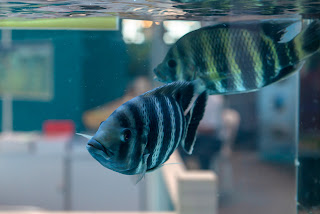
Selecting Good Quality Butterikoferi Cichlid

1. Cranial Hump

Butterikoferi Cichlid has a big figure. An adult can reach up to 10-16 inches or 25-40 centimeters, and its body is bulky. You can notice that the fish is in good shape through its cranial hump. Male Butterikoferi grows a cranial hump on its forehead. Many believe that the bigger the size of it, the stronger the fish is. Cranial hump also shows which fish is more dominant.

2. Coloration

As mentioned above, Butterikoferi Cichlid owns black and white vertical stripes. If you notice that the stripes' colors are less vivid in bigger Butterikoferi Cichlid, it doesn’t mean that they are unhealthy. Younger species have a more radiant color. However, the stripes and colors tend to fade somewhat as the fish grow bigger.

3. Dorsal and Fins

Male Butterikoferi Cichlid is bulkier than the female. Other things that you should notice are their dorsal and anal fins. In male fish, they have extended dorsal and anal fins. Meanwhile, female fish will maintain their round and short-fin shape. 

4. Common Disease

The most common disease that attacks Butterikoferi Cichlid is cryptobiosis. These parasites can infect the internal organ of the fish like the gall bladder and liver. The symptoms of this disease are darkened body color, lethargy, and abnormal swimming. Sometimes, your fish have a hard time swallowing foods. 

So if you’re looking for good quality Butterikoferi Cichlid, make sure the fish doesn’t show any symptoms.

Tank Care

1. Tank Size

Because Butterikoferi has a big body, make sure that your tank is spacious enough. The minimum tank size for a solo Cichlid is 70 gallons. You can add medium size gravel and rocks as they are very territorial. 

2. Tank Mates

As you all already know, this species is exceptionally aggressive. So, never house them with smaller and calmer fish as they may end up being their food. It is better to leave your aquarium as a species tank.

3. Water Condition

The perfect water set-up to maintain Butterikoferi is 22 - 25 °Celcius or 71.6 - 77°Fahrenheit for the temperature and 6.5 - 7.3 for the water pH range. As for the water hardness, keep it intermediate in 4+ dKH.

Those are some tips in picking the good quality Butterikoferi Cichlid, starting from its cranial hump, color, dorsal, and fins condition, as well as making sure any disease does not infect them. 

Popular posts from this blog

How to Choose a Good Quality of Koi Fish

Sometimes, purchasing koi fish to place in your pond can be difficult, especially when you haven’t decided which best type to take home. Well, if you ask, there are two aspects to be considered for choosing the best quality of koi fish. First, the price is the factor you need to think before making a decision. If you are a beginner, it is possible for you to make mistakes. So, it is better to choose the low-priced koi so you won't waste anything in a great deal. Second, the resilience of the koi is another thing you need to consider. As a beginner, you should anticipate the possible mistakes you will do in the future. Let's say that you may forget to feed them or clean their pond. That is why taking home koi with good resilience is a good idea. Then, after you understand those two aspects, you can read and think over the types of koi fish of good quality below. 1. Kohaku Koi Fish The impression of Kohaku Koi fish is simply iconic. Also, because of their resilience and their f...

Types of Cory Catfish and Fish Feed

(Meta description:  Cory catfish are loved for their friendly, sociable manners. They are also easily maintained. Get to know the type and how to  feed cory catfish.) Cory catfish is a favourite to those who love pet fish. They are friendly and easily maintained. Get to know the type of and how to feed cory catfish. 5 Types of Cory Catsifh                1.      Bronze cory catfish (Corydoras aeneus). This type of cory catfish can be either bronze (obviously) or green. They can grow as long as two and a half to three inches (7.5 centimetres). Another thing that affects their growth is the size of the aquarium. The bigger it is, the longer their bodies can grow.        2.      Panda cory catfish (Corydoras panda). With pale bodies, panda cory catfish have black patches on, especially around their eyes. Panda cory catfish is also often mistaken for Corydoras m...

Benefits of Maintaining Bala Sharks Fish at Home

Meta-Description: Here are some benefits of maintaining Bala Sharks fish at home. Know more to reveal what you can get from these stunning creatures. One of the exotic freshwater aquarium choices for the fish hobbyist is Bala Shark. The fish, also known as Tricolor Minow, are schooling fish that will give a magnificent addition to the tanks. And don't feel intimidated with the name, because, the only one that can relate this fish to that giant sea creature is the fin. Far from being dangerous and terrible, Bala Shark is an exotic fish with tolerant behavior and easy temperament. And there are still many benefits you can get from maintaining the fish in the tanks. Read more to know the benefits of maintaining Bala Sharks fish at home: Easy Feeding Habits Bala Shark is omnivores that naturally eat insects their own larvae and eggs, and phytoplankton. In the tanks, you can give them frozen food or dry ones. Their feeding habits are easy and won't burden you. Ho...